 Off Grid Living Wisdom
Your furnace stops when the power goes out. This plan keeps your family warm anyway.
105 pages and 7 calculators that show you how to heat, power, water and feed your home through a two-week outage, and exactly what size generator or battery to buy, so you don't waste $1,000 on the wrong one.

The last time the power went out…
- You found out the gas furnace needs electricity too.
- You stood at the open fridge wondering what was still safe to eat.
- You priced generators and got answers from 2,000 to 12,000 watts.
- You weren't sure if that heater was safe to run indoors overnight.
- You told yourself you'd have a plan before the next one.
This manual is that plan, worked out in advance, with the numbers filled in for your home.
What one bad outage costs, and what changes with a plan
| Common cost of being unprepared | Typical cost | With the manual |
|---|---|---|
| Food thrown out after a long outage (full fridge + freezer) | $250–$500 | Kept cold, or saved with the 4-hour / 48-hour rules |
| Three nights in a hotel because the house got too cold | $450–$750 | One warm room at home, heated safely |
| Buying the biggest generator “to be safe” | $500–$1,500 extra | Sized to your real load in 20 minutes |
| A burst pipe on day two | Hundreds to thousands | Pipes protected or drained before they freeze |
Rough US planning figures, not guarantees; your costs depend on your home, your area and the outage. Generator figure: the typical retail price gap between a right-sized inverter generator and a large portable one.
Heat with wood: $1,260 a year saved in our example
The manual's firewood calculator, for a home that burned 800 gallons of propane ($2,400) last winter: about 3.8 cords of mixed hardwood at $300 a cord, or $1,140. Type in your own bill and wood price to see yours.
Buy the right size, once
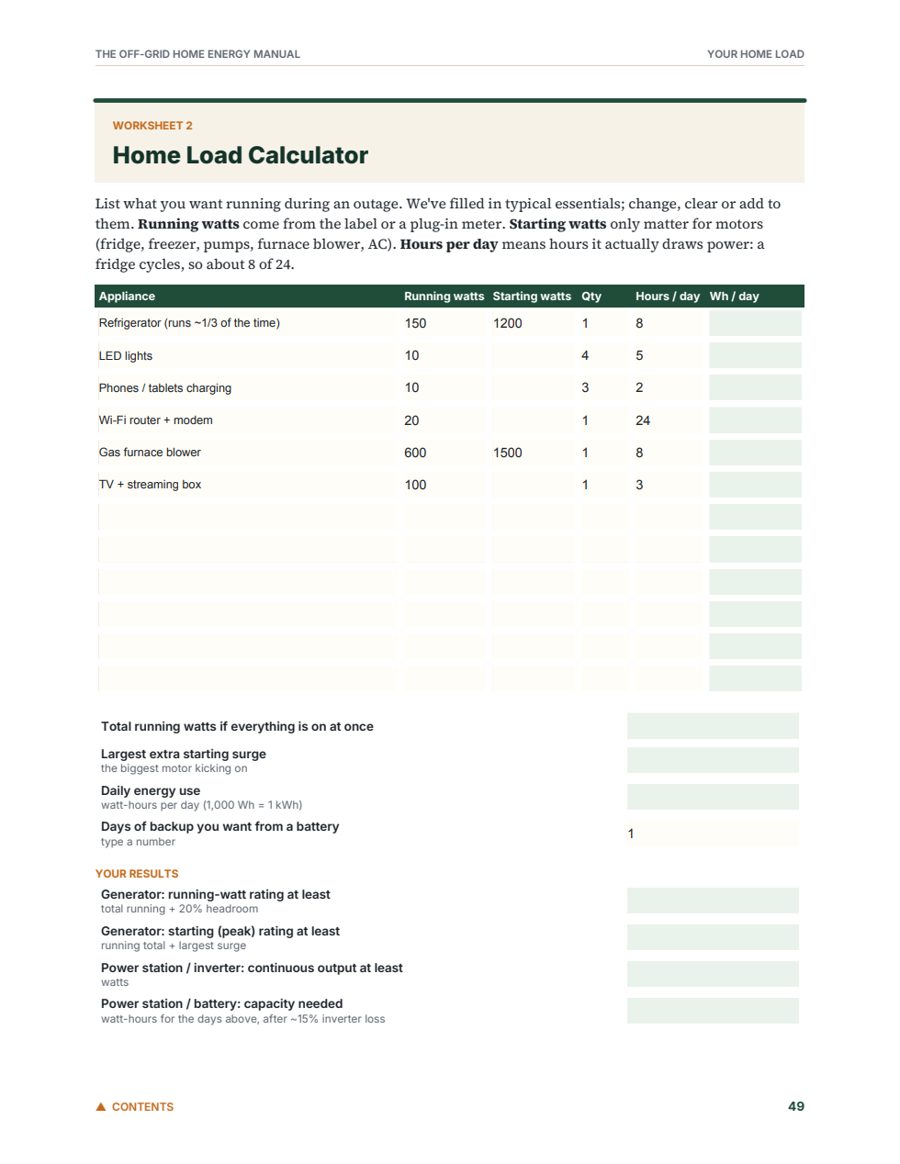
The load calculator turns your fridge, furnace blower, lights and phones into the exact generator, power station or battery size you need, so you don't pay for capacity you'll never use, or end up with a unit that can't start your fridge.
18 chapters. Here's some of what you'll learn.
Stay warm with no furnace
- Why most gas furnaces stop in an outage, and the switch that lets a small generator run yours
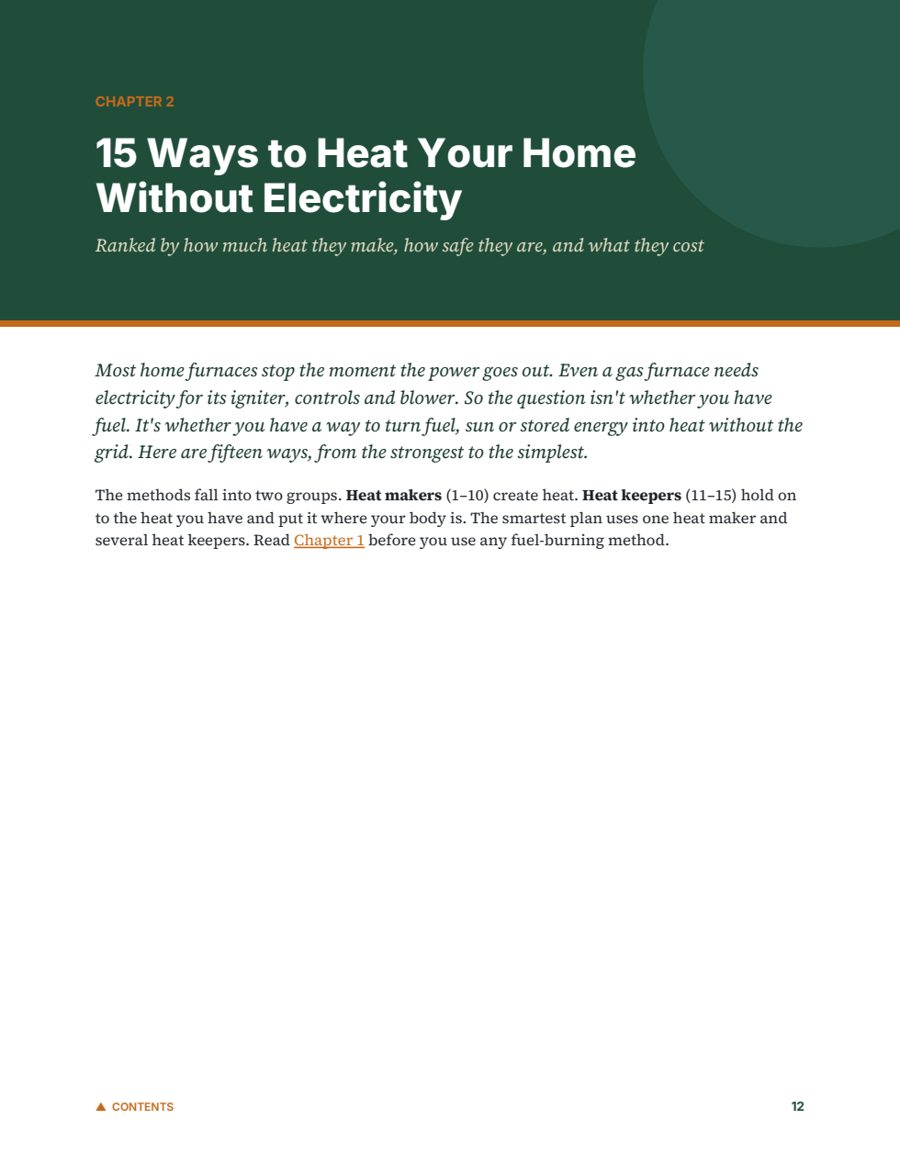
- 15 heat sources ranked by heat output, safety and cost, from a $0 warm room to a wood stove
- The fresh-air rule for indoor propane and kerosene heaters (and when to switch them off)
- How to pitch a tent indoors so the air inside runs 10–15°F warmer
Wood heat that's cheap and clean
- The top-down fire that lights clean and saves wood
- 24 firewood species ranked: which give half again as much heat per cord
- How to spot a short firewood delivery before you pay
- The 1/8-inch creosote rule, and the 60-second chimney-fire plan
Backup power without the guesswork
- The load calculator that sizes your generator, power station or battery for you
- Why a fridge needs 5–10 times its running watts to start, and what that means for your purchase
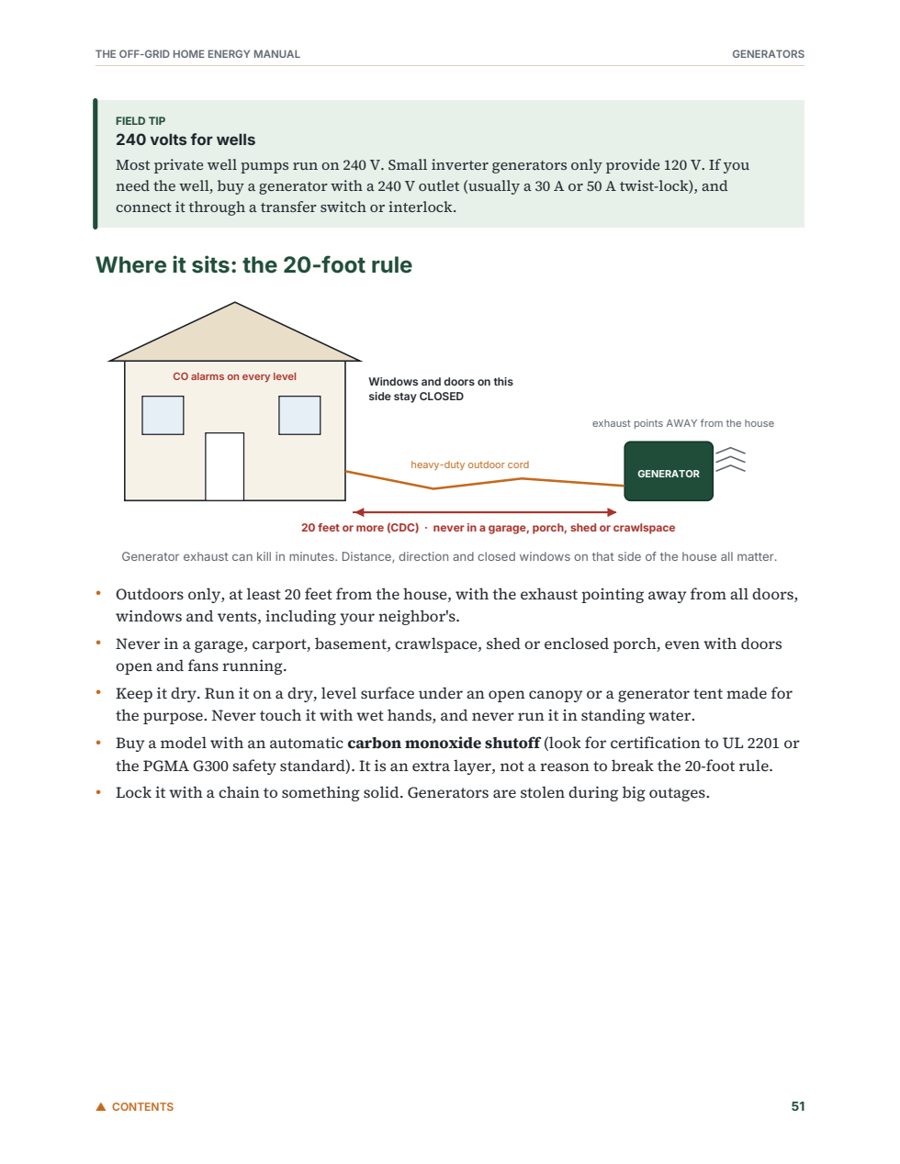
- Transfer switch vs. interlock: the legal ways to connect a generator, and the deadly one
- How long a power station really runs a CPAP, fridge or heated blanket
Solar that works in a blackout
- Why most rooftop solar goes dark in an outage, and what to ask an installer
- Solar and battery sizing in four steps, with the calculator to do it
- LiFePO4 vs. lead-acid: the real cost per usable kilowatt-hour
- Plug-in “balcony” solar: where it's legal and what it saves
Water, food and cooling
- The 40–80 gallons of clean water already in your home, and how to drain it safely
- Exact bleach drops to make water safe (with a calculator for any amount)
- Keep-or-toss rules for every shelf of the fridge
- How to keep a house cooler in a summer blackout, and when to leave
A plan your family can follow in the dark
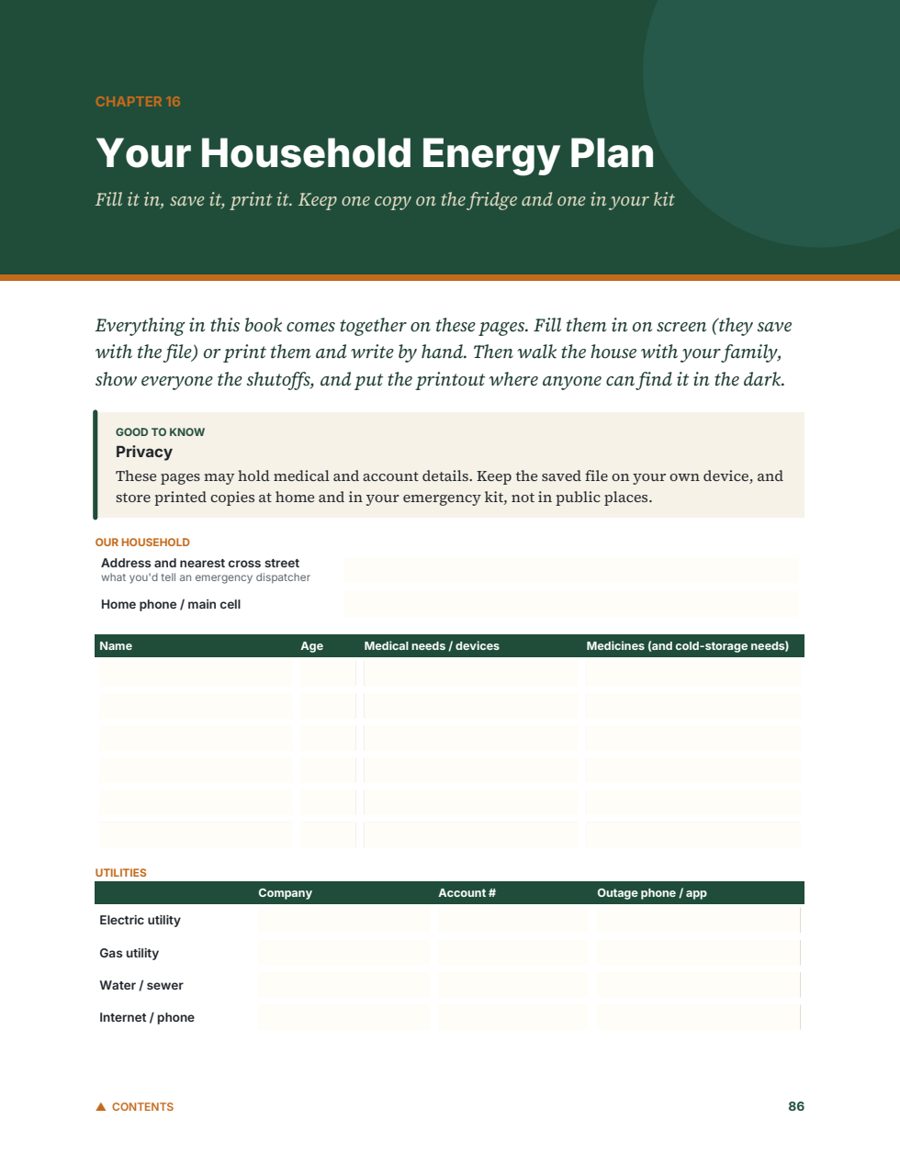
- A fill-in household plan: shutoffs, contacts, medicines, who does what
- Tick-box checklists: 72-hour kit, two-week supply, winter and summer prep
- An hour-by-hour outage playbook for the first two weeks
- Cut-out reference cards for the fridge, the stove and the generator shed
Real pages from the manual
Clickable contents and bookmarks, fill-in worksheets, and calculators that update as you type.
One price. No subscription. Yours forever.
- The Off-Grid Home Energy Manual105 pages, 18 chapters, 2026–27 edition
- 7 built-in calculatorsGenerator, solar, battery, firewood, fuel, water and heating cost, in the PDF and online for any phone
- Fill-in Household Energy PlanShutoffs, contacts, medicines and roles, saved in the PDF
- Tick-box checklists72-hour kit, two-week supply, seasonal prep, generator log
- Printable quick-reference cardsCarbon monoxide, first hour, water, food, generator, wood stove
- Lifetime updatesEvery future edition, free
One-time payment · instant download
Get the Manual · $47Secure checkout. PDF works on computer, tablet and phone.
Why we made it
Most outage advice online is either a gear review or a doomsday shopping list. Neither tells you what your house needs. We wanted one place with the methods, the safety rules and the math: what heat works without power, what size backup you need, how to keep water and food safe, and what to do in the first hour.
Every number is checked against fire codes and official guidance from NFPA, CDC, USDA and EPA, and carbon monoxide safety runs through every chapter. Off Grid Living Wisdom is an independent channel; no brand paid for or reviewed this manual.
Before you buy
I'm not handy. Is this still useful?
Yes. Most of the manual is decisions and preparation, not building: which heater is safe, what size generator to buy, what to store, what to do in the first hour. Where a job needs a licensed electrician or installer, the manual says so.
I rent. Can I still use it?
Yes. The warm room, indoor-rated heaters (where your lease allows), power stations, water storage, food safety and the outage playbook all work in a rental.
Will it work in my climate?
Yes. Every method is shown with the conditions it suits: cold northern winters, mild southern ones, hurricane season and summer heat waves.
Does it work outside the US?
The methods work anywhere. Codes, units and agencies follow US standards, with metric conversions and notes on where to check local rules.
What format is it, and how fast can I use it?
A PDF you download right after checkout. Open it on a computer, tablet or phone and start with tonight's 20-minute safety steps. The calculators run inside the PDF in the free Adobe Acrobat Reader, and you also get online versions that work in any browser.
Is this professional advice?
No. It's general information, checked against fire codes and official safety guidance (NFPA, CDC, USDA, EPA). Always follow your equipment manuals and local codes.
Other questions?
Email support@offgridlivingwisdom.com. A real person answers.
The next outage won't wait for you to get ready.
$47 once. The methods, the math and the plan, before the lights go out.
Not ready yet?
Start with the free 3-page Winter Outage Checklist. It comes from the manual's own checklists, and you can use it tonight.